Mountain Guides
Casablanca Volcano Ascent – Private Mountaineering Experience in the Andes
A perfectly shaped volcano that invites you to discover mountaineering in an open, luminous, and deeply volcanic environment. Casa Blanca offers a gradual ascent with no technical difficulties, featuring constant views of the great volcanoes of southern Chile.
Duration: Full day (with a previous night in Chile)
Overnight: Night in local accommodation
Type: Private tour
Route: Antillanca Ski Center / Summit
Dates: Year-round (subject to ski center operations and snow conditions)
Difficulty: Moderate (summer conditions)
Distance: 8/12 km (total, round trip)
Total elevation gain: +700/950 m
Departure: From Bariloche or Villa La Angostura
Area: Antillanca Ski Center – Los Lagos Region, Chile
Points of interest: Antillanca Ski Center, Raihuén Crater, Lava caves, Osorno Volcano, Puntiagudo Volcano, Rupanco Lake, Tronador Range, Casa Blanca volcanic cone.
Optional: This experience can also be linked with other nearby volcanic ascents—such as Puyehue, Sarnoso, or Calbuco—creating a progressive volcanic mountaineering itinerary in the region. There is also the possibility of combining the day with a soak in natural hot springs in the area.
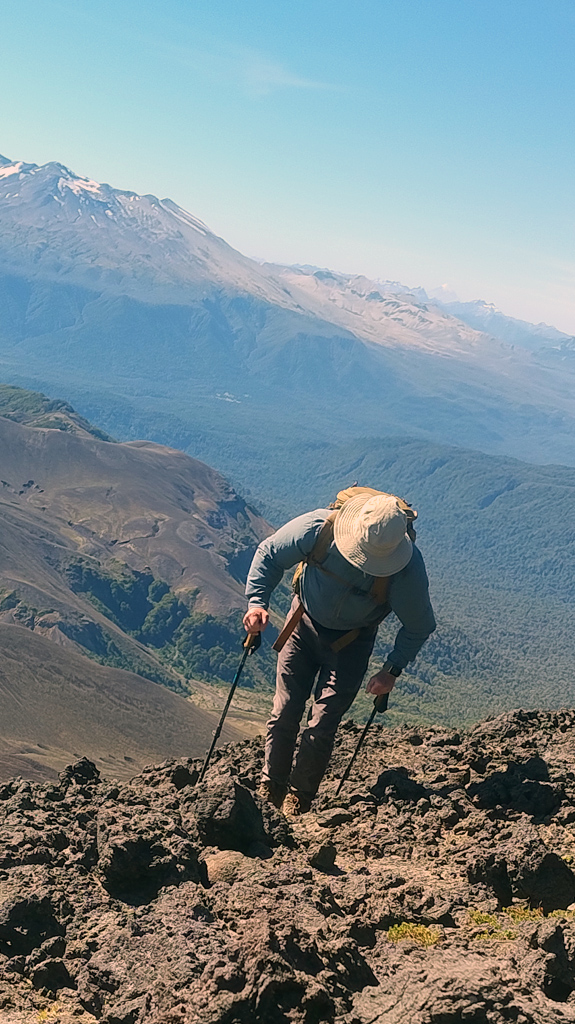
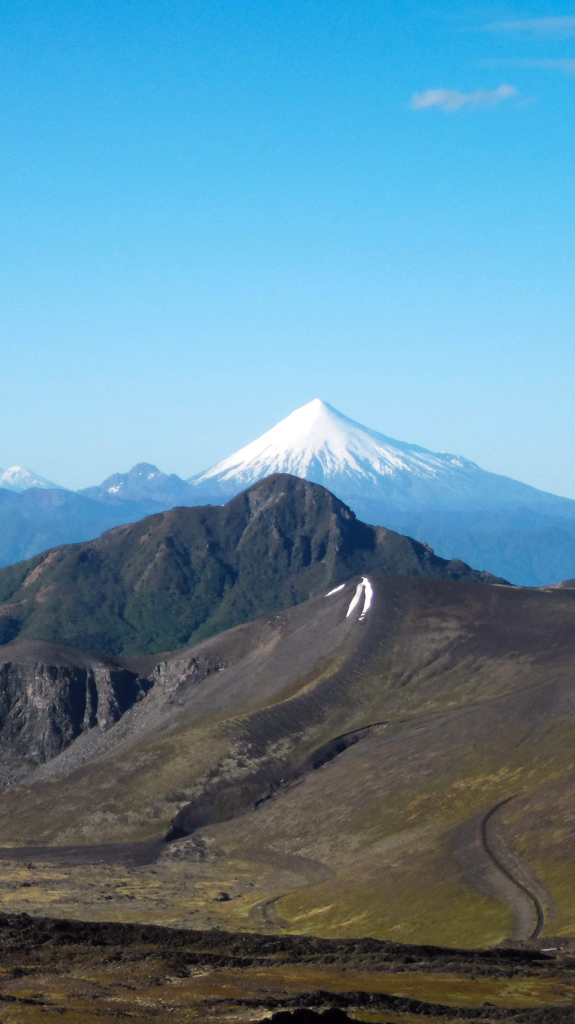
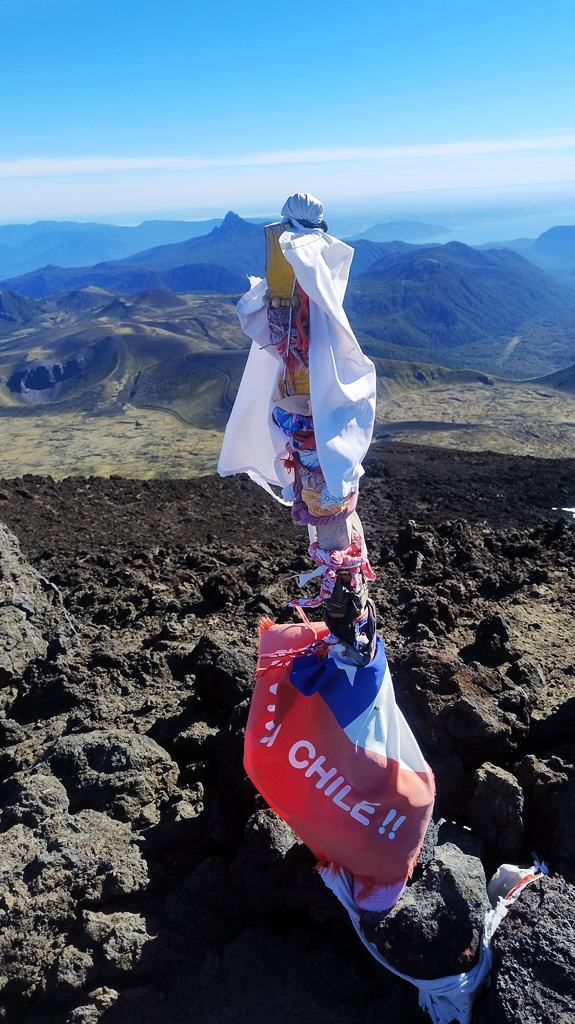
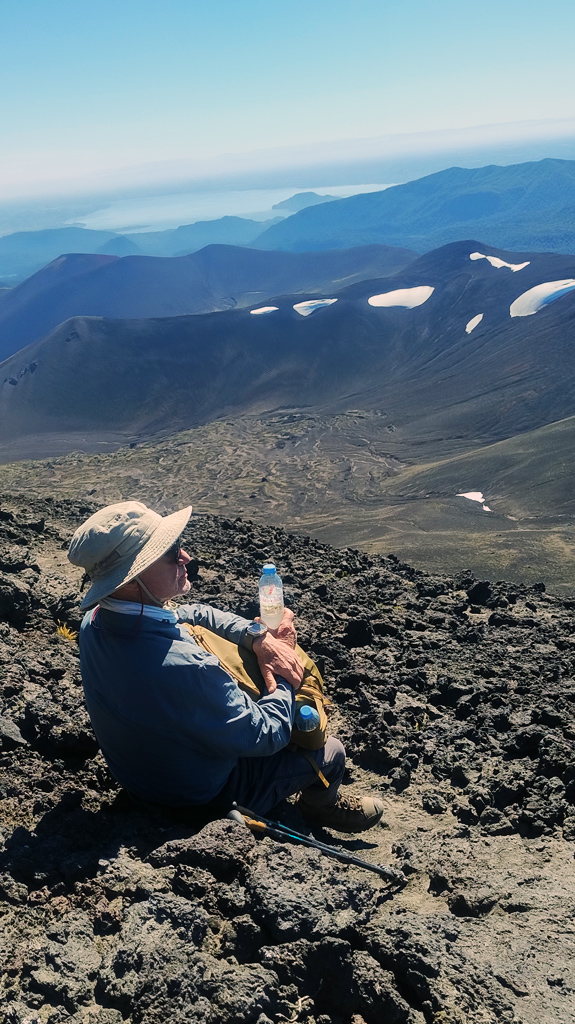
To reach the trailhead, we must cross the Andes into Chile and complete immigration procedures. Processing time can vary; in summer, it is advisable to avoid weekends, as traffic to the neighboring country is often heavy.
We will depart from Bariloche or Villa La Angostura toward the Cardenal Samoré International Pass, where we will complete the corresponding immigration procedures before continuing along the international route. Along the way, we will cross the Pantojo River, which originates at Pitón Pantojo (spanish) and flows downward forming the Dora and Santa Ana Waterfalls (spabish).
A few kilometers later, the road leads us to the entrance of Puyehue National Park, on Chilean territory—one of the most outstanding natural environments in the region.
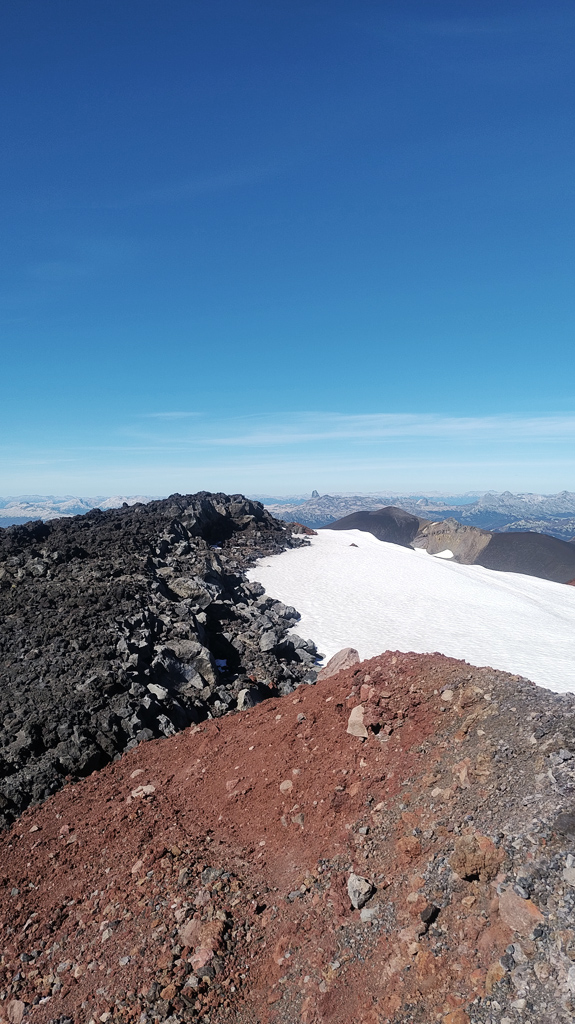
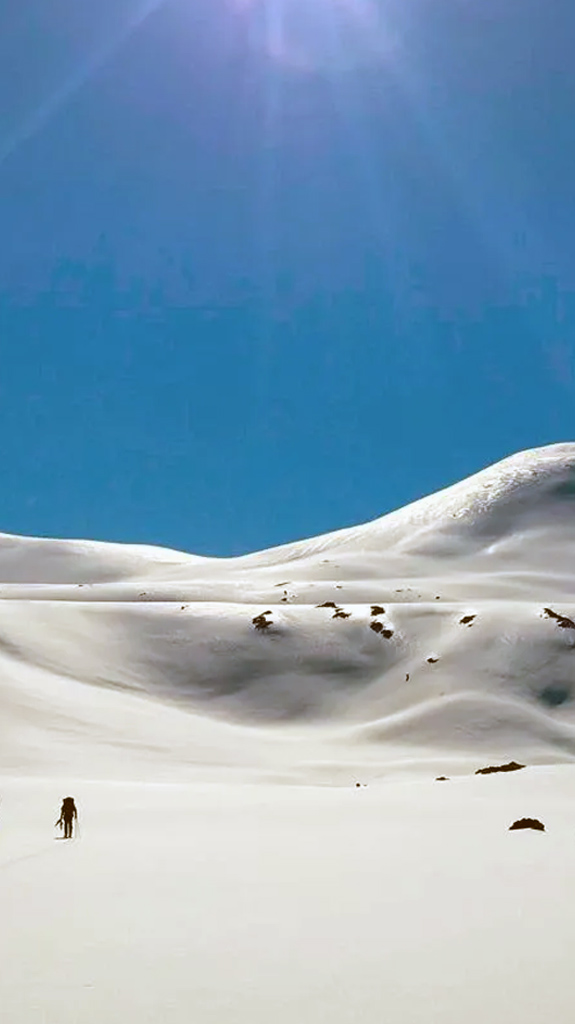
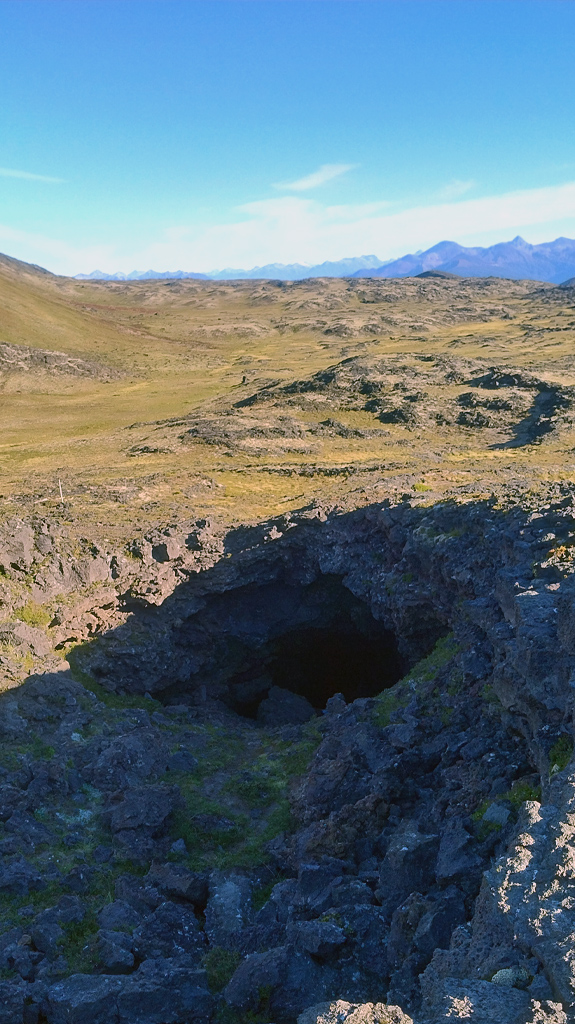
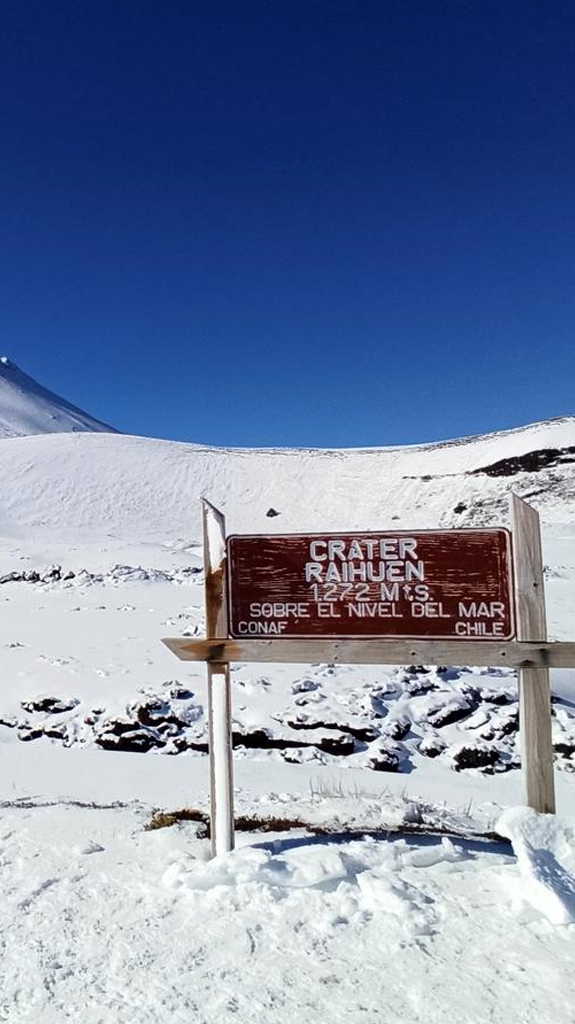
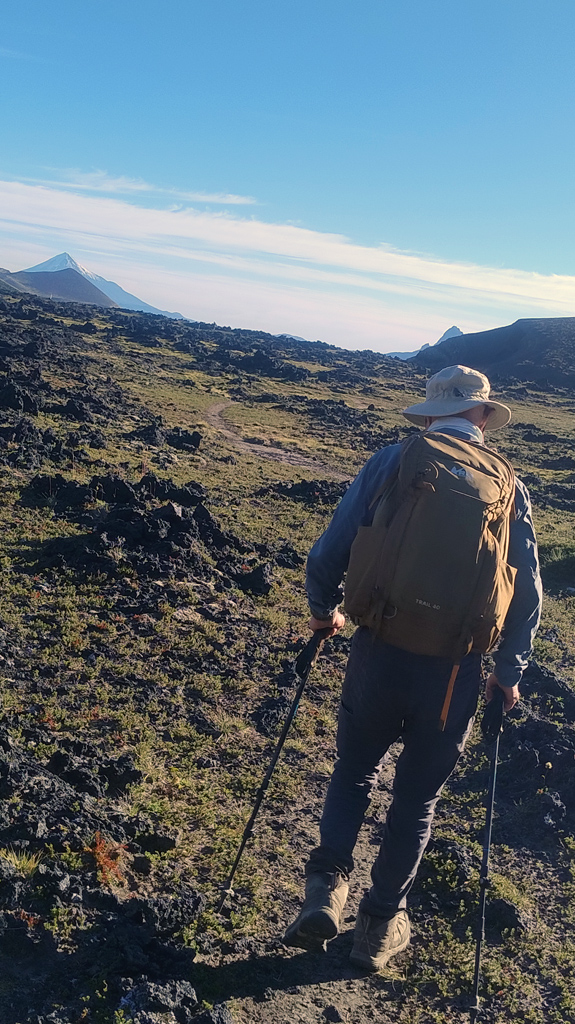
The starting point is located in the area of the Antillanca Hotel, at just over 1,000 m in elevation. From there, the route ascends gently along a wide, treeless strip that marks the transition between forest and open mountain terrain. Once past the vegetation line, the landscape becomes distinctly volcanic: broad plains, scoria, compacted ash, and old tracks once used by ski resort machinery, all the way to the Raihuén Crater.
In spring/summer, if the road is clear, it is possible to add a short vehicle ascent along the first section of the route from the ski center to the Raihuén Crater, reducing the total elevation gain.
Progress is comfortable and highly visual. We cross the aforementioned crater, a large depression of volcanic origin that impresses with its scale and the sensation of walking within an ancient eruptive setting. From this point, the terrain levels out, allowing us to recover our pace before tackling the most demanding section of the day.
After crossing an extensive plain at the base of the volcano, the final ascent begins along the Casa Blanca cone. The slope increases steadily, though without technical sections or exposure.
A perfect experience for walking a volcano, reading the landscape, and enjoying southern Chile from one of its most panoramic summits.
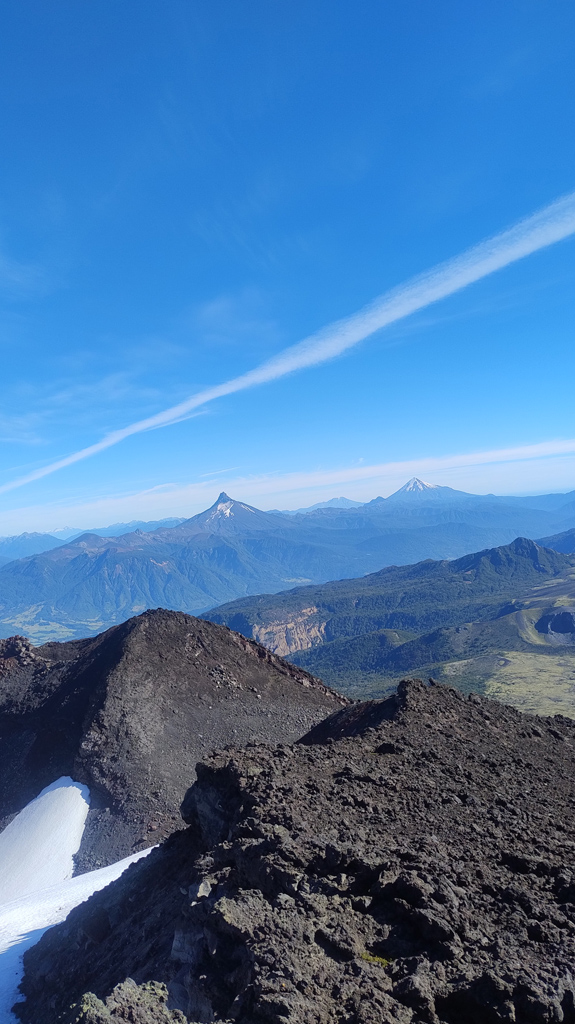
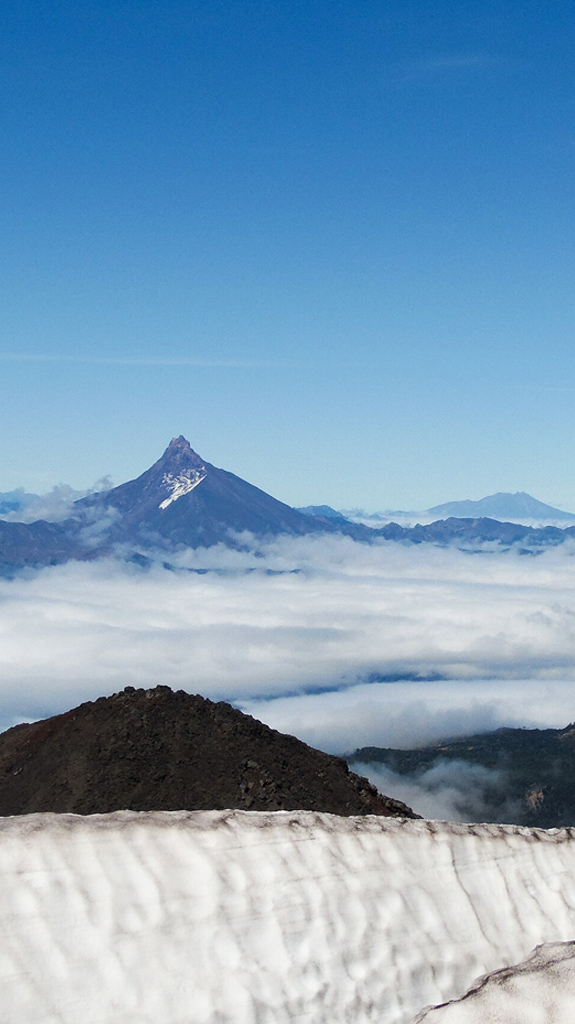
With every meter gained, the horizon expands: the sharp silhouette of Puntiagudo Volcano appears, along with the imposing Osorno, Lake Rupanco, and—farther away—other major volcanic landmarks of the region such as Puyehue, Sarnoso, and Calbuco, forming a landscape dominated by cones and Andean massifs.
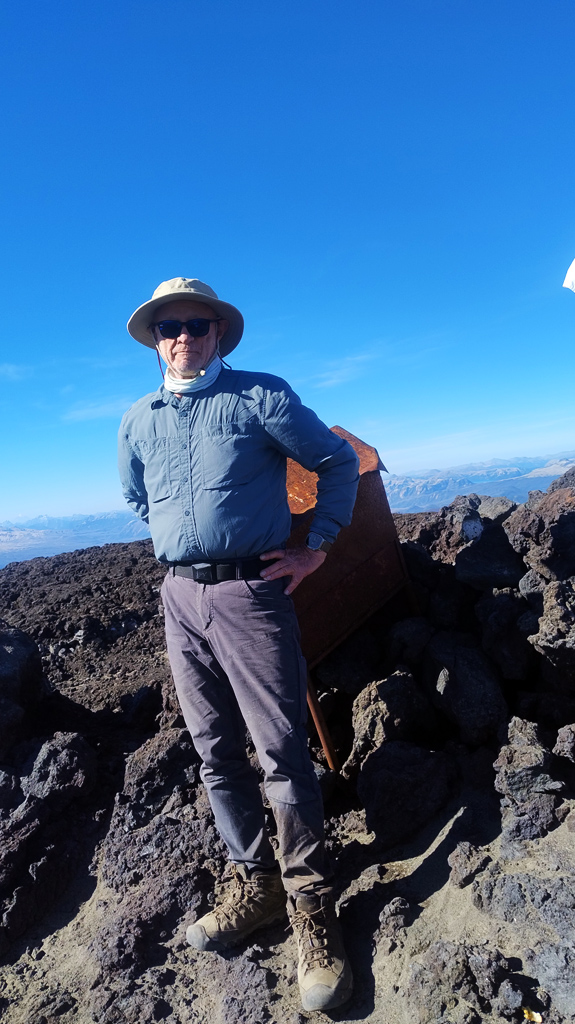
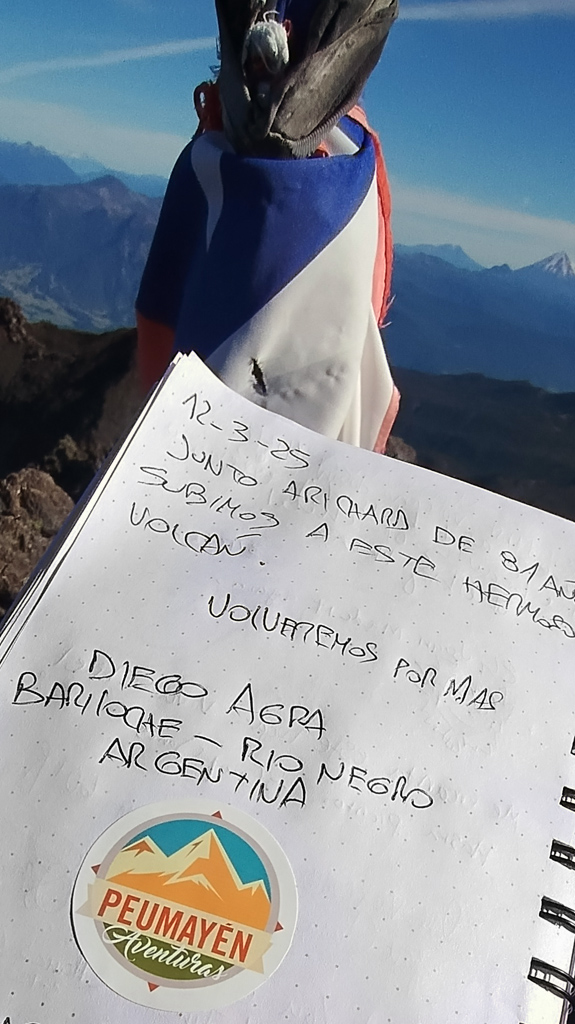
The summit is reached on the northwestern rim of the summit crater at 1,990 m, offering open and continuous views in all directions.
There are no false summits or doubts: the highest point is clearly recognizable and rewards the ascent with a privileged panorama of the Andes and the great lakes of southern Chile.
During the winter season, and provided the ski center is operating, there is the option to use the chairlifts to gain elevation up to the upper station. This alternative reduces the total elevation gain of the day and allows the experience to be adapted according to conditions and objectives.
Known in Mapudungun as Antillanca—“the jewel of the sun”—this volcano represents an ideal gateway to Andean mountaineering: accessible, aesthetic, and rich in scenery.
On its slopes, it is common to observe lava flows of different colors, as well as traces of the most recent eruption in 2011, during which ash covered part of the Argentine Andes (as can be seen when hiking to Refugio Dormilón or the Dora and Santa Ana Waterfalls).
Its privileged location makes it possible to understand the relationship between active and inactive volcanoes, lakes, and natural hot springs that characterize this area of southern Chile. At the end of the ascent, and depending on the itinerary, the day can be combined with a well-earned rest at the Aguas Calientes hot springs or at the Termas del Puyehue Hotel.
This ascent also serves as a point of connection within a unique volcanic zone, where it is possible to understand how active and inactive volcanoes, lakes, and geothermal features come together within a single territory. From here, Casa Blanca naturally integrates into a broader circuit of mountains and experiences in southern Chile.
Will you walk along a volcanic summit surrounded by lakes, cones, and natural hot springs?