Mountain Guides
Jakob Refuge Winter Trek with Overnight – Private in Bariloche
When winter settles over Bariloche, the trail to Refuge Jakob transforms into a true challenge for the senses. The forest is blanketed in snow, streams grow still beneath the ice, and silence dominates the valley. It’s an intense experience, reserved for those seeking more than just a hike: a true winter adventure in the mountains.
Duration: 2 days (3 days recommended)
Difficulty: High
Route: 28 km*
Dates: June to September
Refuge altitude: 1,620 m (5,315 ft)
Elevation gain: +1,100 m (3,609 ft)
Type: Private tour
Points of interest: Tambo Báez, Casa de Piedra Stream, Jakob Lagoon, Témpanos Lagoon, Schweitzer Pass, Casalata Valley, Cella Mountain, Brecha Negra Pass.
*round-trip distance; additional hikes/trekkings in the area can be added upon choice
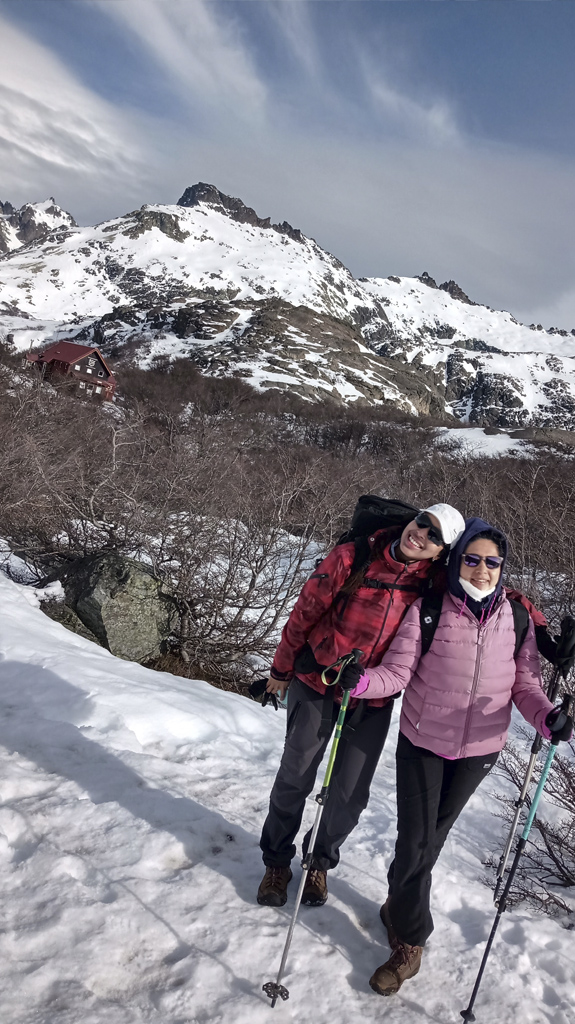
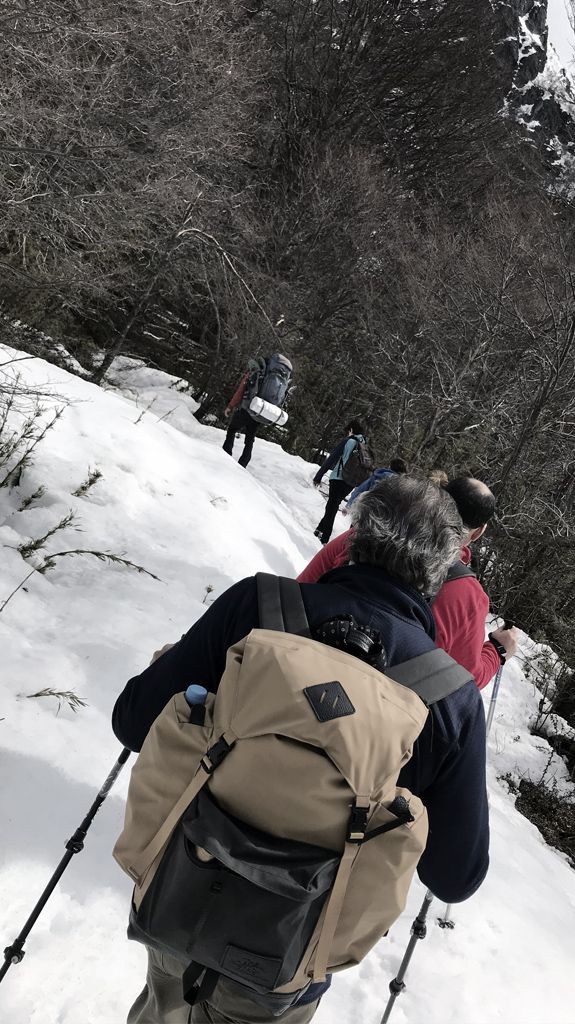
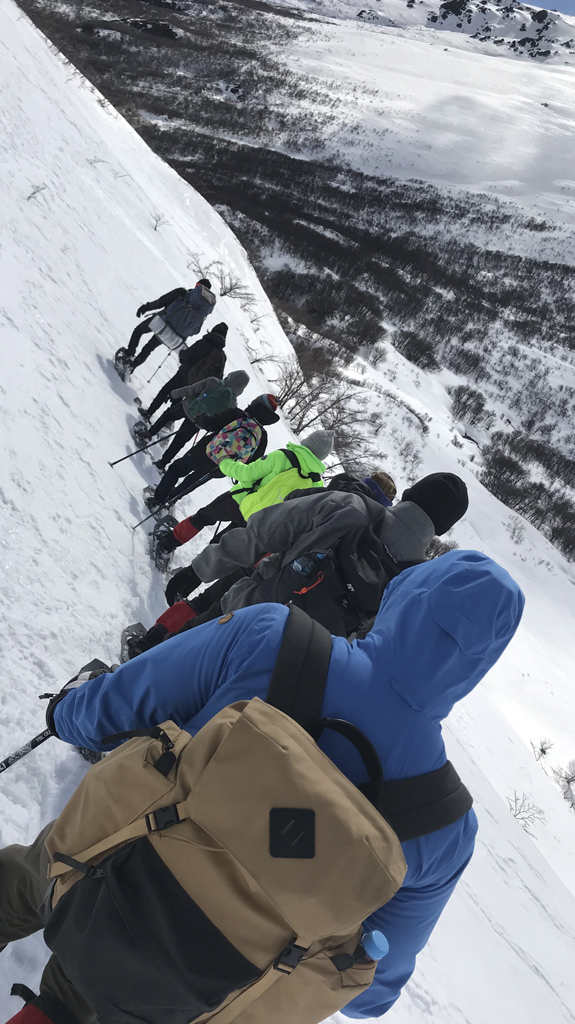
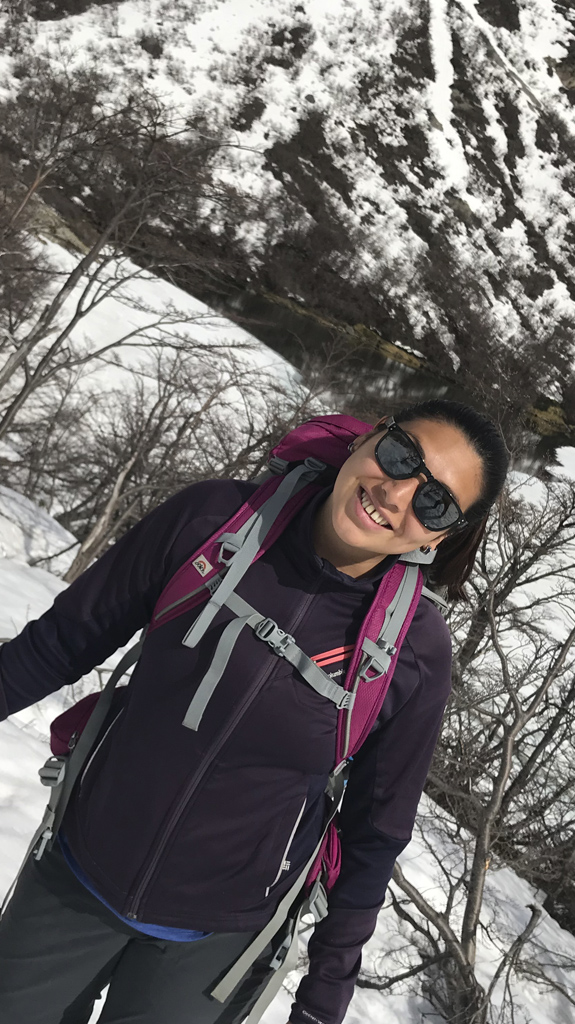
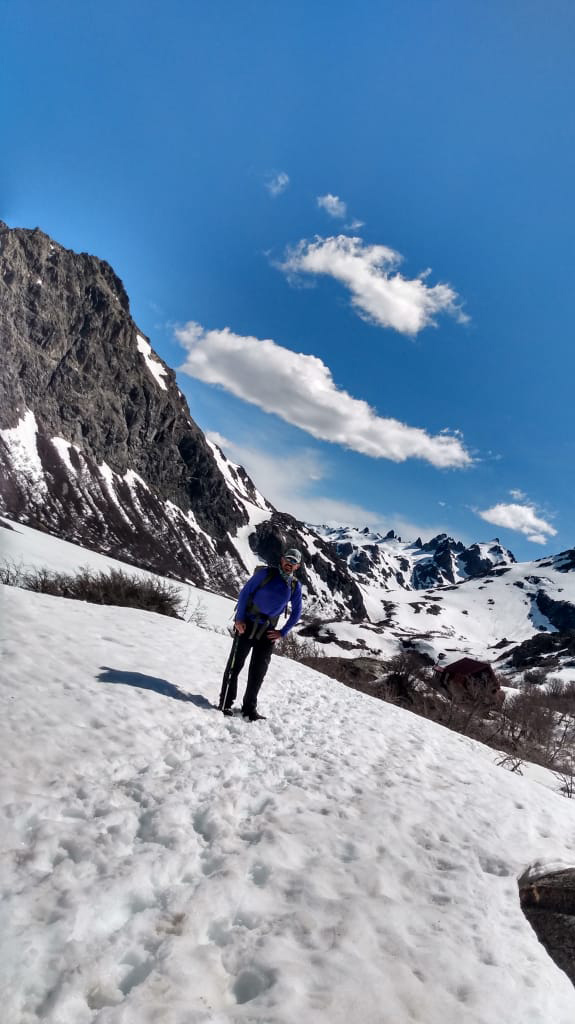
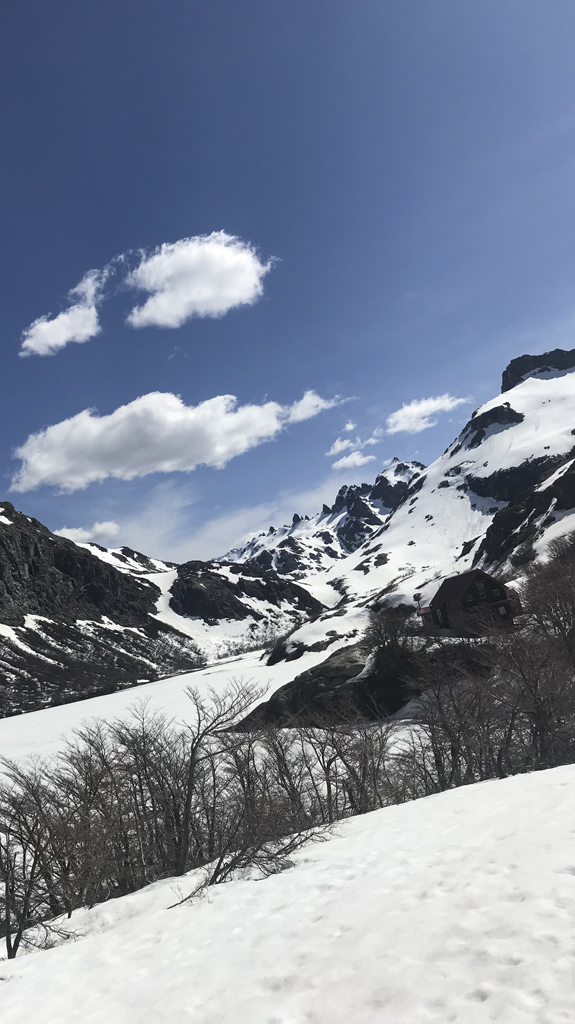
With the arrival of winter, the trekking to Refugio Jakob becomes something completely different. The trail, covered by a white mantle of snow, turns every step into a challenge that also connects you more deeply with the magnitude of Patagonian nature. This trekking is not just a physical journey but a profound experience in which every snowy corner of the mountain reveals a new side of the landscape.
The day begins early, when the first light of dawn starts to illuminate the Patagonian horizon. From the very first moment, the cold winter air is intense, and the crunch of snow underfoot becomes the soundtrack of the way. The first section of the trekking takes you through a forest of radales, maitenes, and cypresses, which then transforms into a tall coihue and lenga forest, where the snow-covered trees create a magical atmosphere.
Each step draws you deeper into a landscape transformed by winter, and the distant mountains seem even more imposing from this initial stretch.
After more than two hours of hiking, you reach the first crossing of the Casa de Piedra Stream, which in winter may be frozen or flowing between blocks of ice. Here, the landscape begins to change, and the first views of the Casa de Piedra Valley unfold before your eyes, with snow-covered mountains and the dark waters of the stream contrasting with the whiteness of the surroundings.
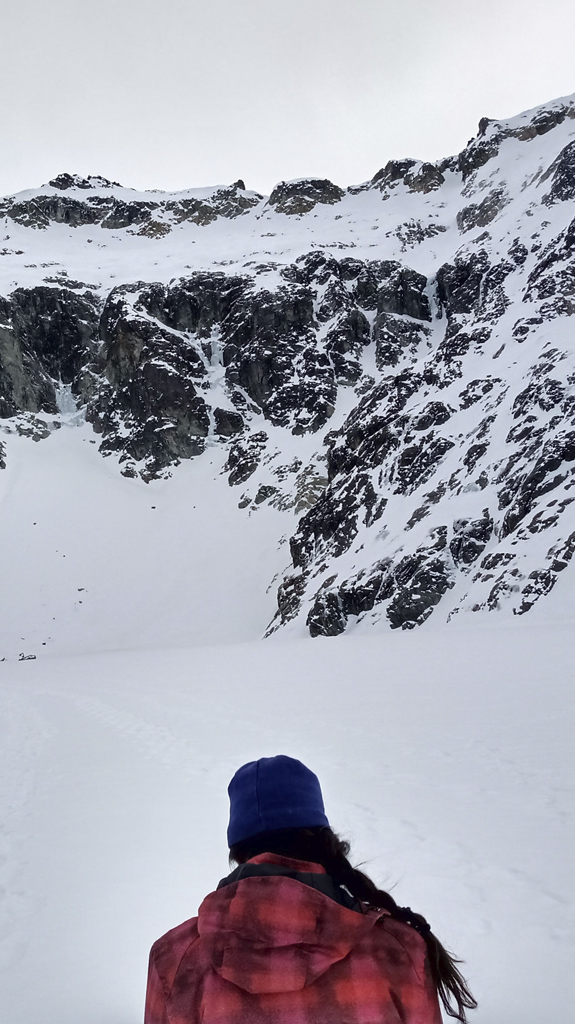
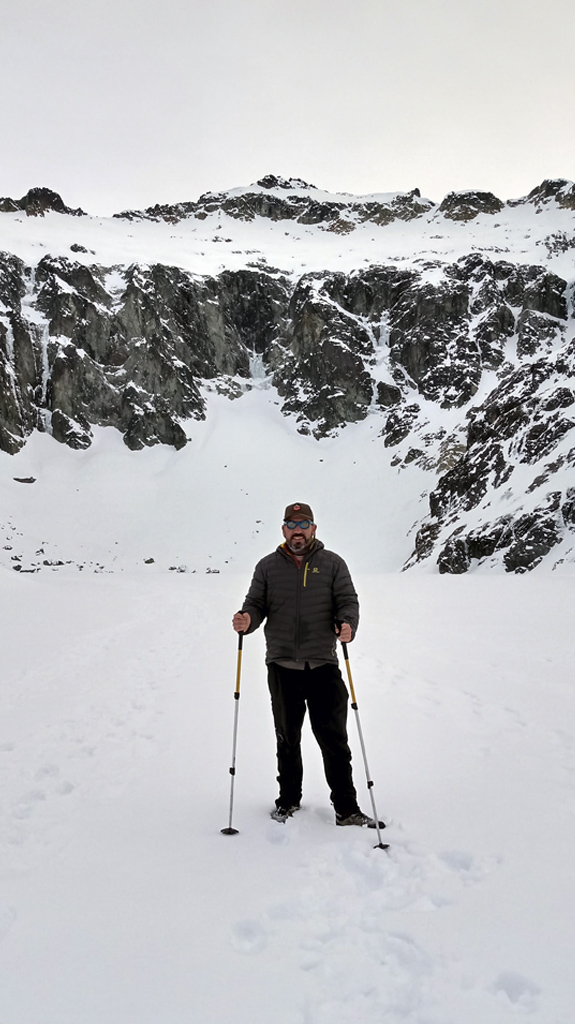
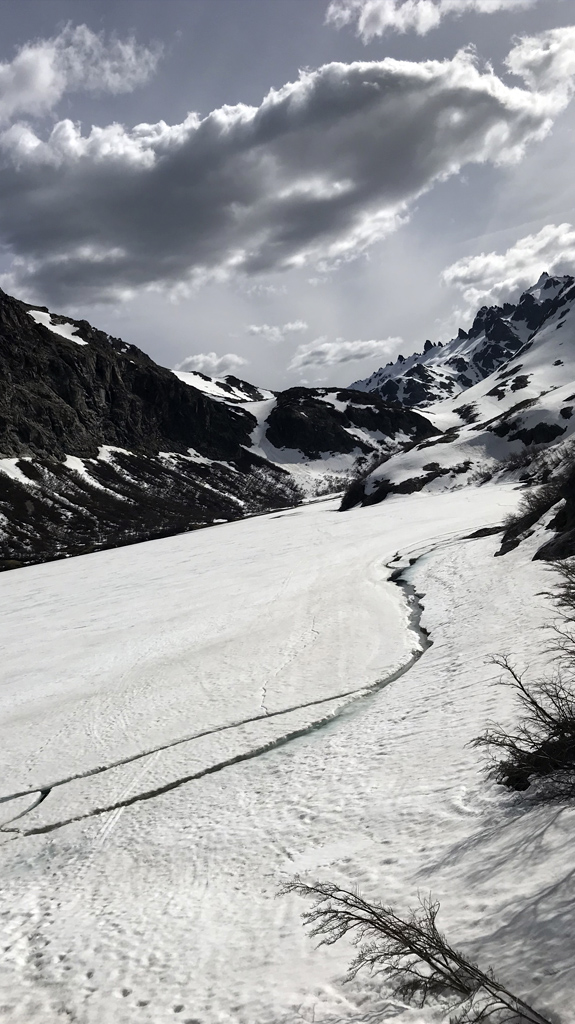
As you ascend along the trail, the views change again. The lenga forest is left behind, and the scenery opens into vast snow-covered fields. As you advance, Jakob Lagoon begins to appear in the distance, completely blanketed in snow. In winter, the lagoon is only a memory beneath the snow, and its usual serenity transforms into an even deeper stillness.
From here, the views of Cerro Cella and Schweitzer Pass grow closer. These points stand on the horizon, marking the pace of the ascent and offering breathtaking panoramas of the mountain range.
The trekking toward the refuge also takes you near Témpanos Lagoon, a place that in summer is known for its large floating blocks of ice, but in winter lies completely sealed under the snow. The tranquility of this Patagonian corner seems multiplied at this time of year, when the landscape becomes an immaculate white canvas.
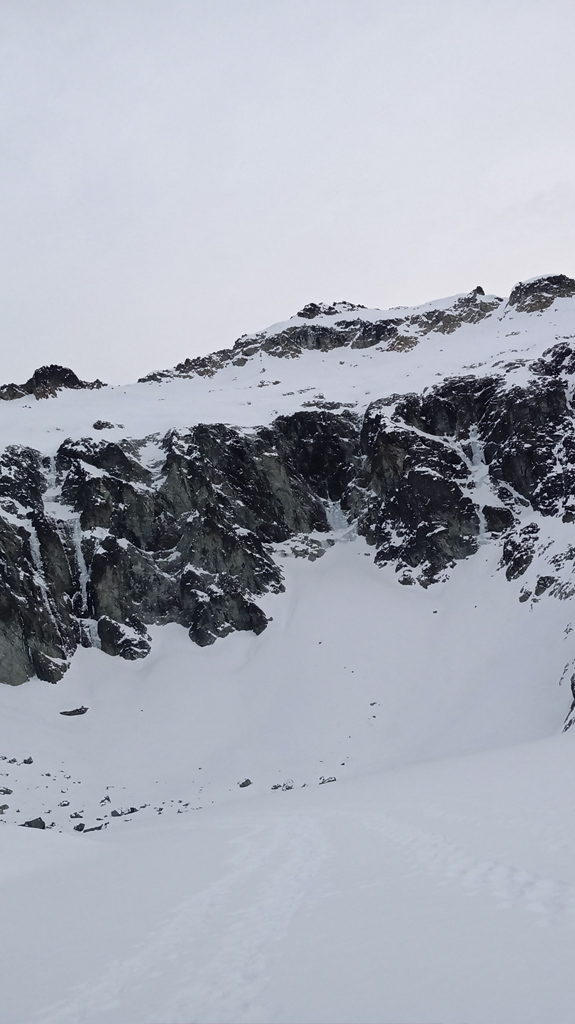
After passing these sections, you approach Schweitzer Pass, one of the highest points of the trekking, where the views extend across the range. This pass, which in summer serves as a connection between different mountain routes, becomes even more spectacular in winter, when the cold wind and snow seem to have frozen time.
From Schweitzer Pass, you can see Brecha Negra Pass, another key point of the trekking, and Cerro Cella, standing tall on the horizon.
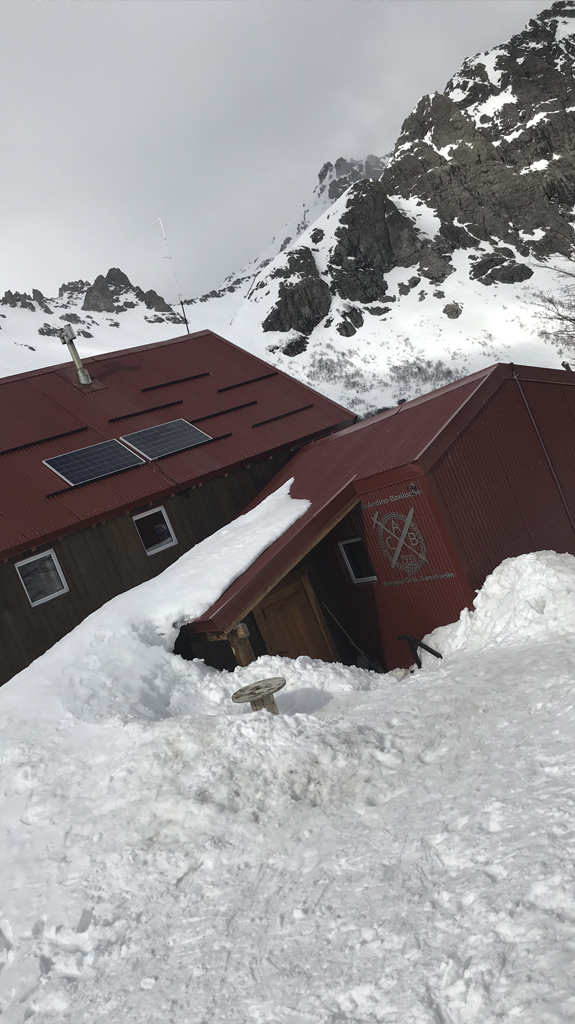
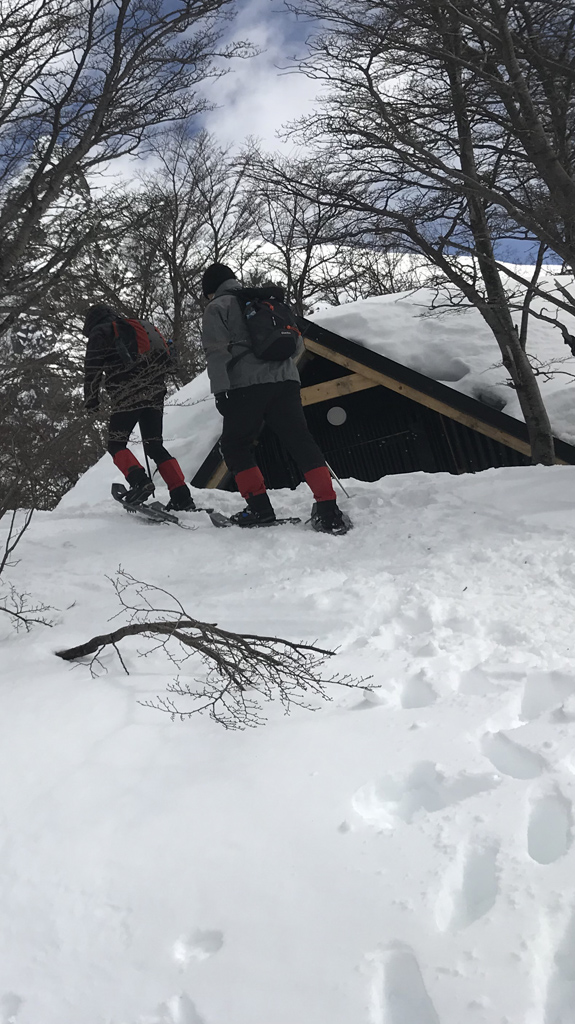
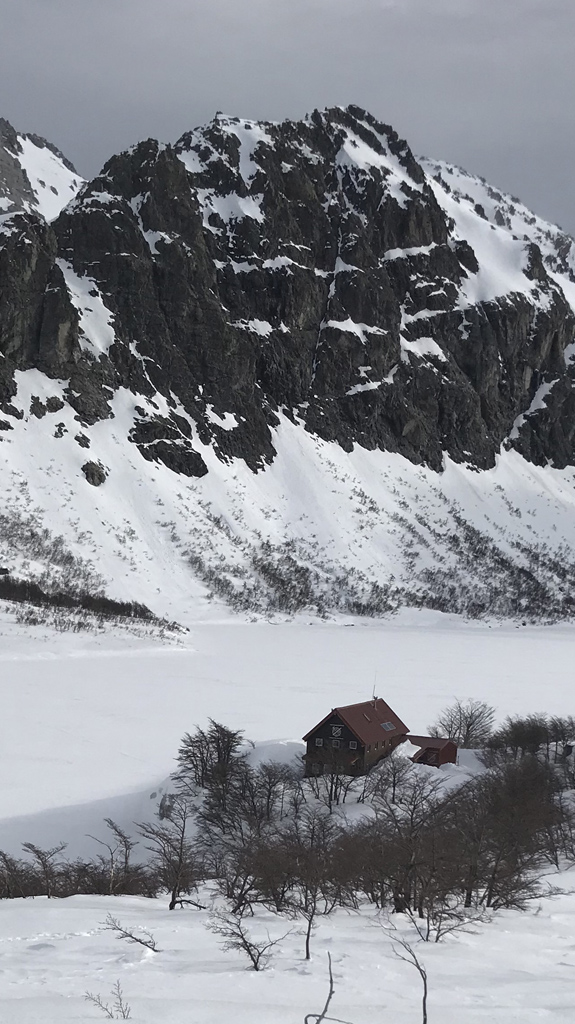
Refugio Jakob is finally within reach, and upon arrival, the scenery changes once again. Jakob Lagoon is no longer visible, but the majesty of the mountains surrounding the refuge and the blanket of white snow covering the entire area remain striking.
The refuge, open year-round, welcomes you with its cozy warmth, offering well-deserved rest after a demanding day. From inside, the view of snowy mountains and solitary valleys is even more imposing, making it the perfect place to relax and enjoy a hot tea.
The landscape around Refugio Jakob changes dramatically with the seasons. Did you know that snow acts as a natural insulator for flora and fauna during winter?
Every step toward the refuge draws you further into this unique atmosphere, as if you were walking through a storybook landscape.
The return is made along the same trail, but now with a fresh perspective of the scenery. Every corner of the path seems to have changed under the snow, and the contrasts between the shadows of sunset and the brilliant whiteness of the snow create a magical atmosphere. During the descent, the feeling of having lived a unique experience becomes stronger, and the winter landscape of Patagonia is etched in your memory.
What would it be like to feel the solitude of the Patagonian winter as you walk over the snow toward Refugio Jakob?