Mountain Guides
Refugio Viejo Tronador Ascent – Private Multi-Day Trek in the Andes
A challenge if you are looking for an adventure experience: fording rivers, crossing wetlands and cane fields, we will reach the highest refuge in our National Park. Built in 1938 and despite being in Argentine territory, we must cross the mountains into Chile to enjoy the view at the foot of the Tronador glaciers.
Duration: 3 days
Overnight: First night in tent, second in bivouac refuge or tent
Type: Private tour
Route: Pampa Linda / Chilean Customs / Refuge
Dates: December to April
Difficulty: High/Very High
Distance: 37 km. (total round trip)
Total elevation gain: +1,900 m.
Refuge height: 2,300 m.
Points of interest: Pampa Linda, Saltillo de Las Nalcas (waterfall), Cauquenes Stream ford, Mount Volcánico turnoff, Mallín Chileno, Carabineros, Border Marker 1, Mallín Inclinado, Refuge Viejo "Vicente Ojeda Cancino", Border Marker 2, Blanco Glacier
Optional: From Refugio Viejo you can hike across the Manso Glacier, and on the descent you can add the summit of Cerro Volcánico. For a longer, less steep trek, from Carabineros you can continue the Vuriloche Crossing to Ralún, Chile, walking for 7 days through the Valdivian rainforest, natural hot springs, and finishing at the Pacific Ocean.
*Available in 2 days with very high physical demand
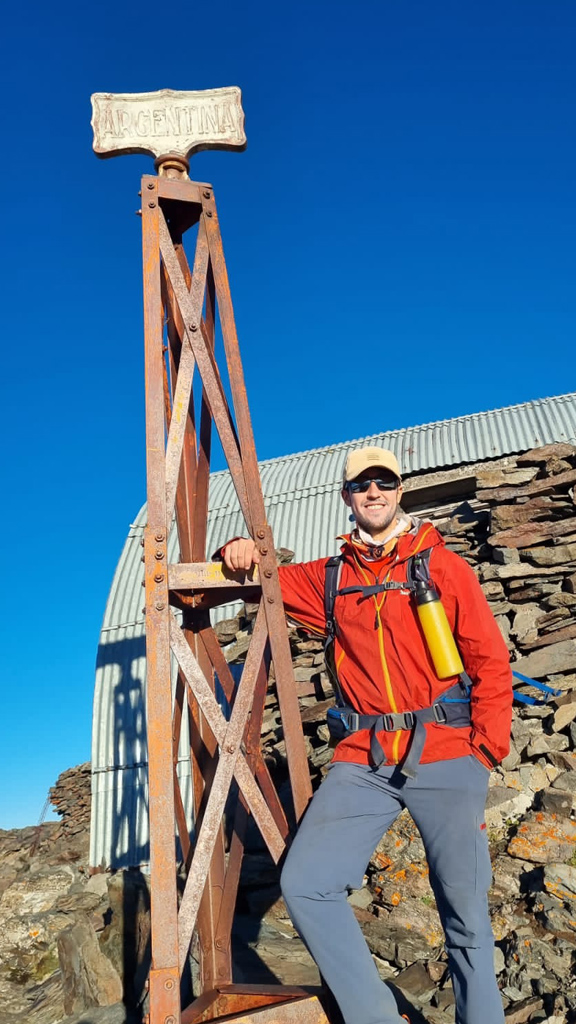
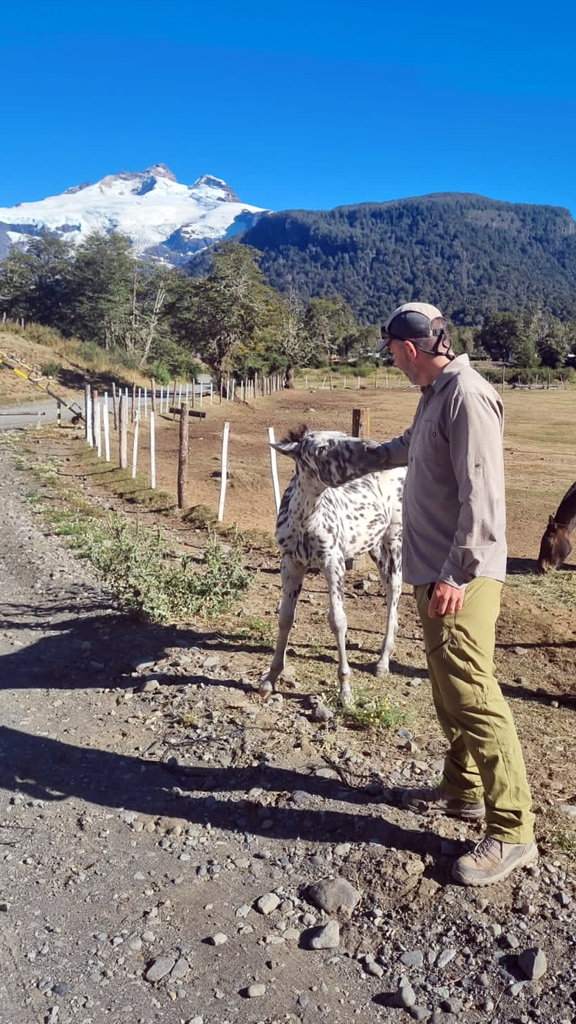
Para llegar al inicio del sendero deberemos cruzar la cordillera hacia Chile y hacer trámite en Migraciones Argentina. El tiempo del mismo es variable, en verano evitar los fines de semana ya que suele haber mucho tráfico al vecino país. El acceso a este sector del Parque Nacional Nahuel Huapi tiene establecidos horarios de entrada/salida. Se debe abonar entrada en EFECTIVO.
The trek to Refuge Viejo (old) is much more than an ascent: it is an adventure that invites you to connect deeply with Patagonian nature, crossing landscapes that combine dense forests, crystal-clear rivers, wide wetlands, and the imposing presence of glaciers and volcanoes. This journey, starting at Pampa Linda, offers a unique opportunity to discover little-traveled corners, with the living history of local mountaineering and panoramas that surprise at every step.
To start this trek, you must complete an immigration procedure at the Gendarmería in Pampa Linda, located beside the Manso River, and then confirm it at the Carabineros post at the border. This is essential to legally cross the historic Paso Vuriloche.
The old refuge is a bivouac that preserves the essence of the mountain, ideal for those seeking an authentic high-altitude experience.
From Pampa Linda, the trail gently enters nature, passing through cane fields and coihues, inviting a first contact with Patagonian flora. In just ten minutes, the route turns onto a well-marked secondary path, which marks the true start of the journey to Refuge Viejo.
Along the route, the Cauquenes Stream is crossed several times, and you must change footwear to keep your boots dry. The ascent continues along the stream through native vegetation, and as you advance, the trail enters a lenga forest covered with lichens known as “old man’s beard,” hanging from the branches and giving the landscape a magical appearance.
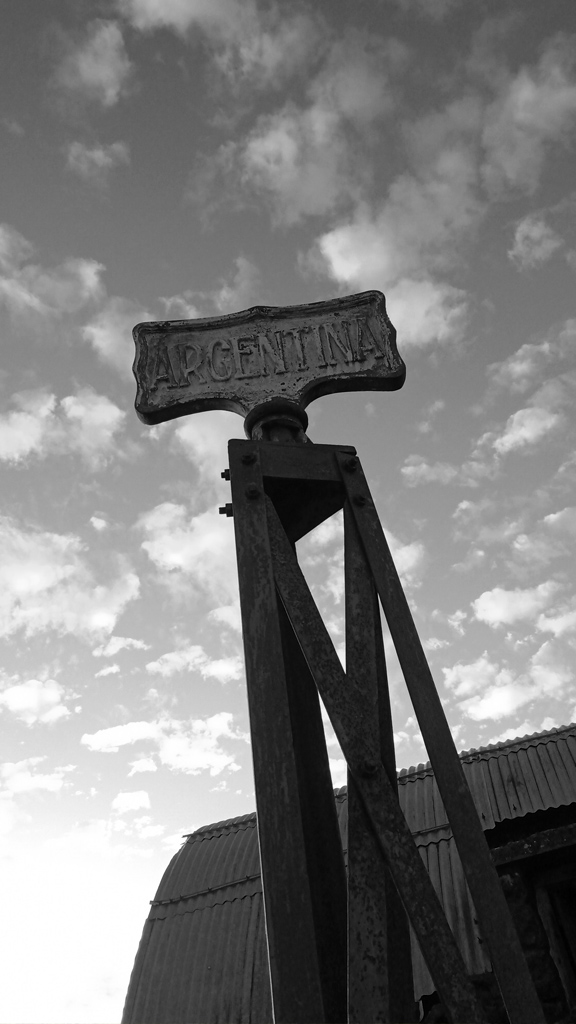
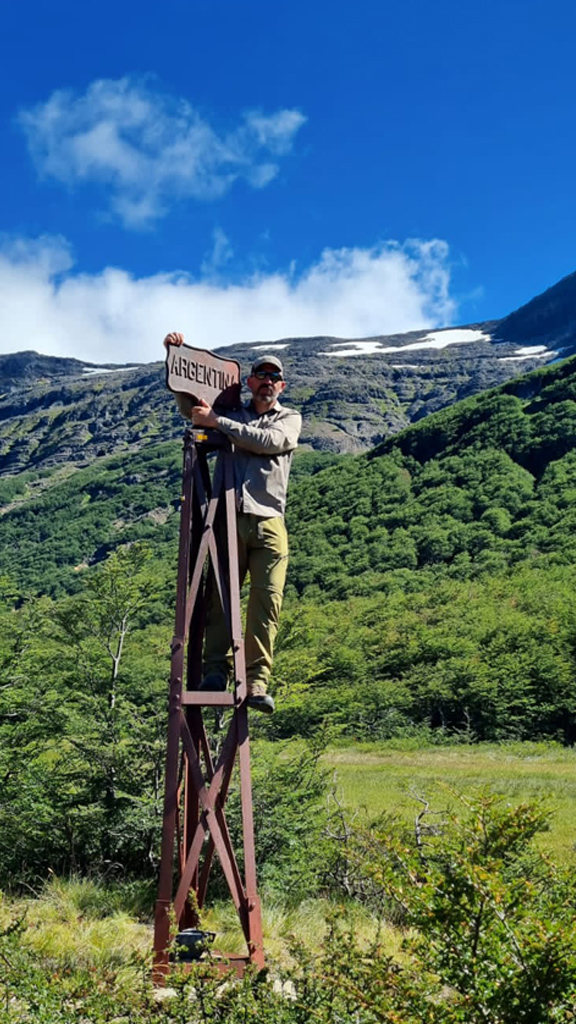
Before reaching Carabineros, there is a marked turnoff leading to the border marker. It is a short and easy stretch, ideal for visiting the exact point where Argentina and Chile meet.
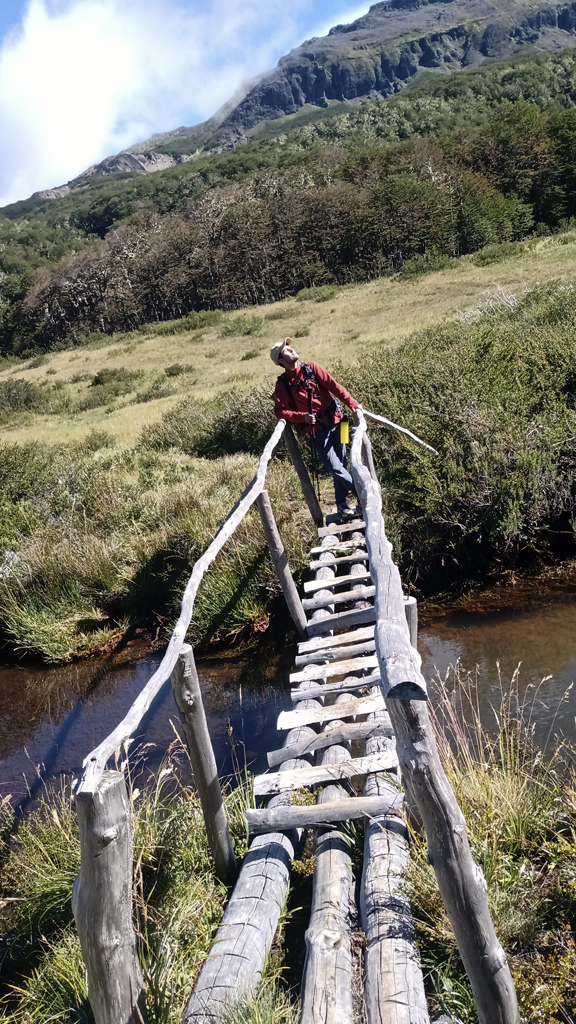
After several hours of ascent, the historic Paso Vuriloche is reached at 1,360 meters above sea level, an old route used to access the Chilean coast. From there, the trail gently descends into the extensive Mallín Chileno, a vast wet and green area crossed along its southern edge, surrounded by forest and marked with logs in wetter sections to ease passage.
The Mallín Chileno is an ideal place to rest and refill water, as several springs and streams are present. It is the chosen site for camping overnight (although it is possible to continue to the refuge, requiring higher physical effort). At the edge of the Mallín lies the Carabineros Vuriloche advanced post, where immigration documents must be presented again.
The real name of the refuge is Vicente Ojeda Cancino, a historic mountaineer recognized for his experience and contribution to the exploration of the Cerro Tronador region. In tribute to his knowledge and career, the so-called “Refugio Viejo” bears his name.
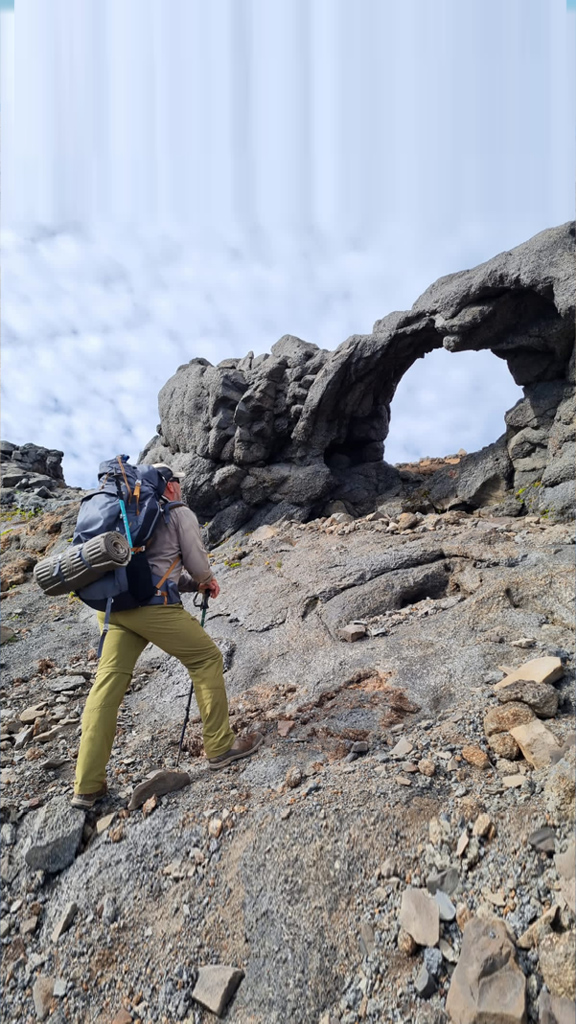
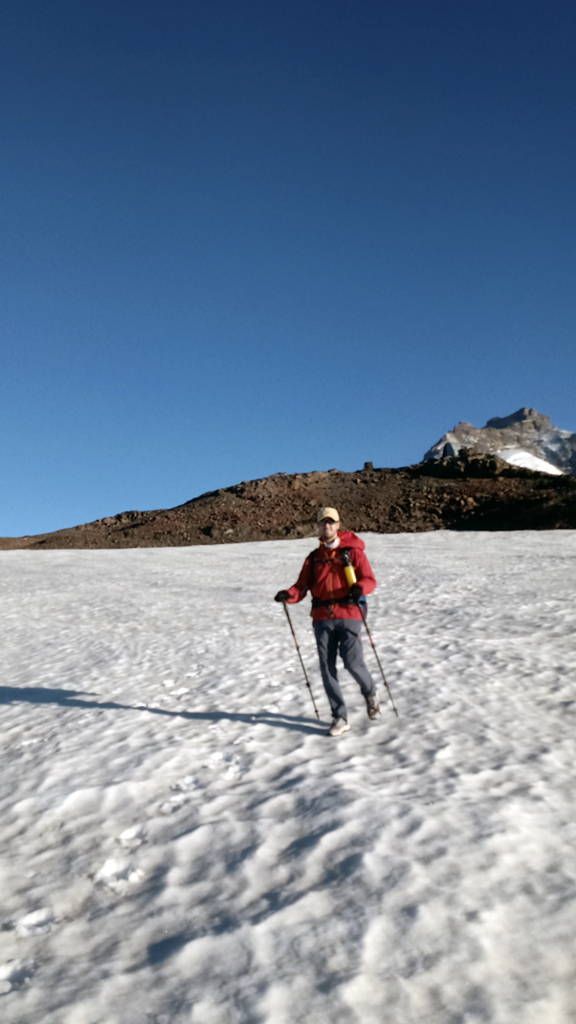
On the second day, from Carabineros begins the most challenging section of the ascent. The trail first enters a tall lenga forest, then advances through the Mallín Inclinado, overlooking a wide western valley. Later, the path crosses a rocky and volcanic ridge, with snow-covered sections common during the cold season.
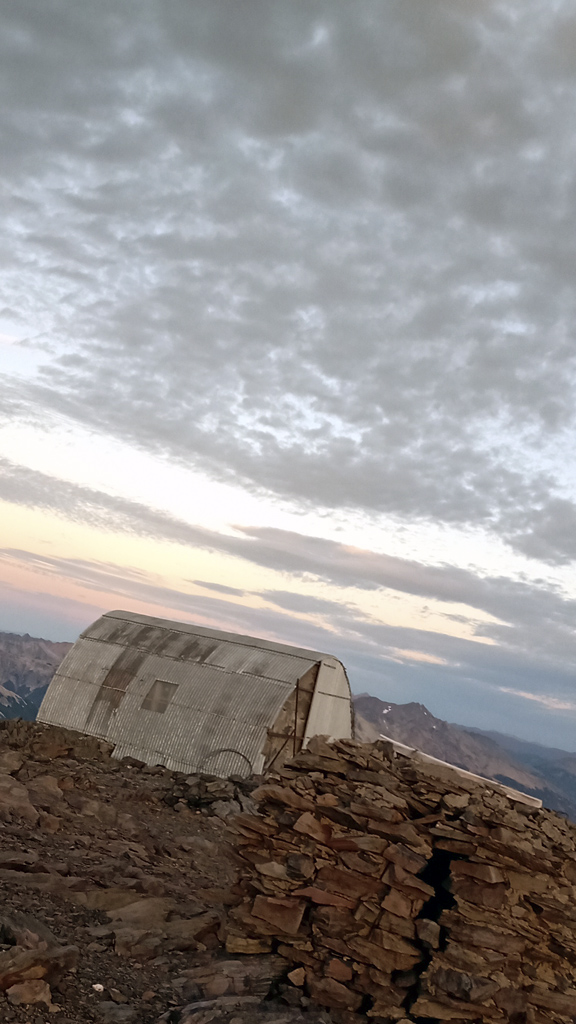
Refuge Viejo, located at 2,300 meters, is a historic refuge without services or staff, functioning as a bivouac for those daring to spend the night at altitude. With capacity for 8–10 people, it offers basic wind protection but no thermal insulation, making it essential to have a good sleeping bag and warm gear. There is no water at the site, so refill before arriving.
The ascent to Refuge Viejo shares part of the trail with the route to Cerro Volcánico. After a turnoff, continue west toward the Chilean border, crossing lenga forests and wetlands that offer unique and natural landscapes.
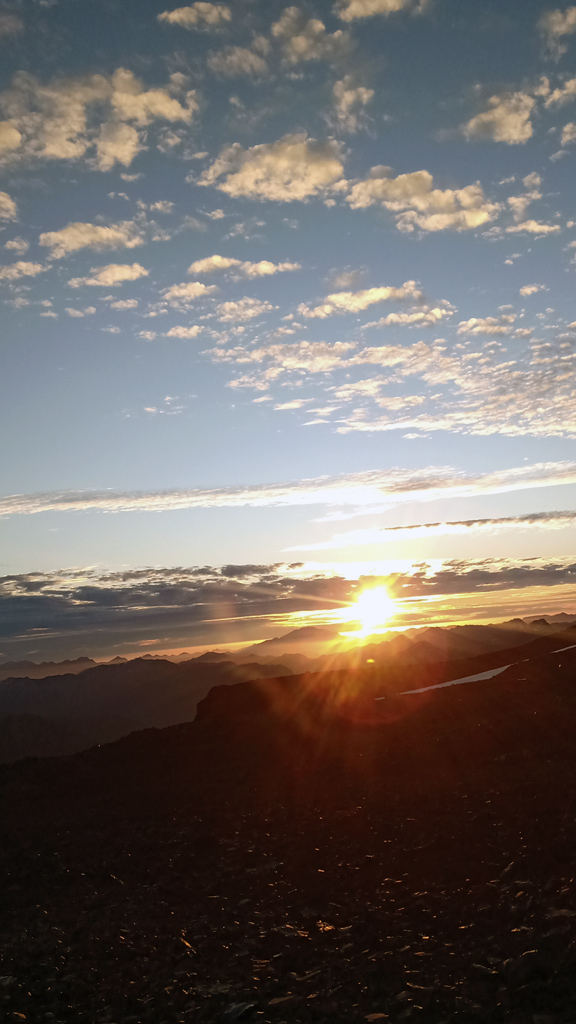
After several hours of ascent, the refuge is reached, where you can rest and have a meal. Exposed to the wind and without services, it invites a night in complete simplicity, surrounded by snow, rock, and the deep silence of high mountains.
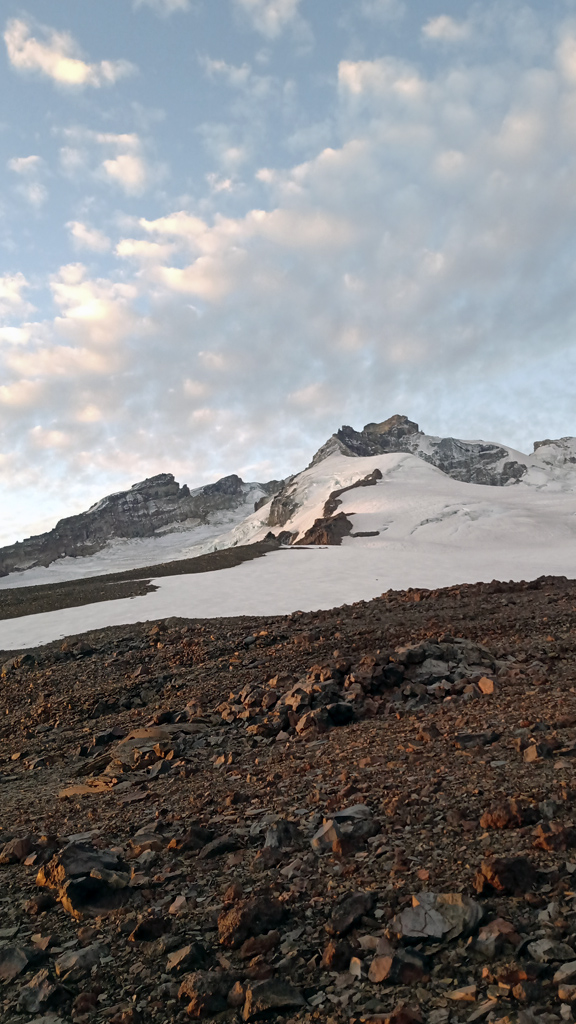
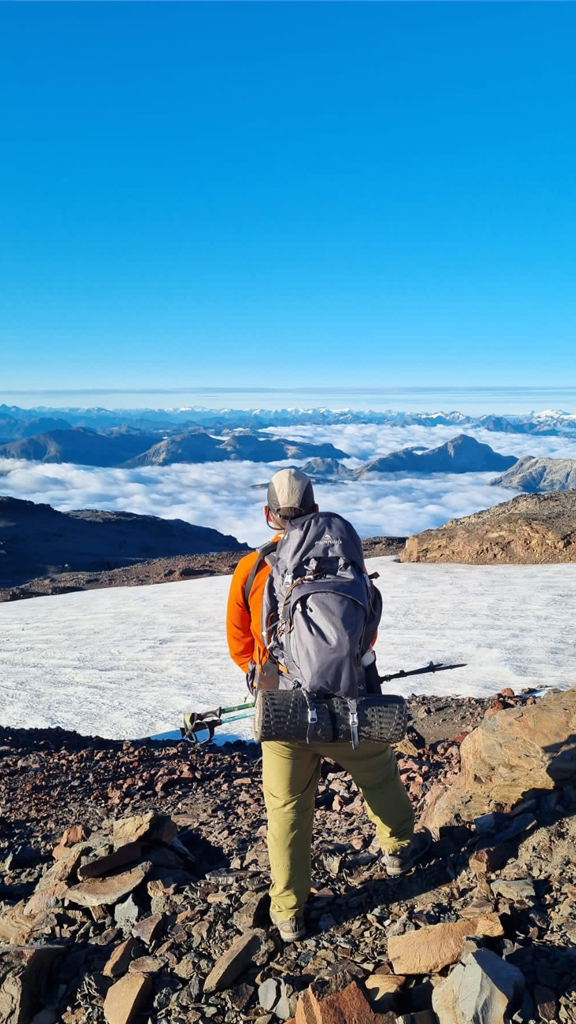
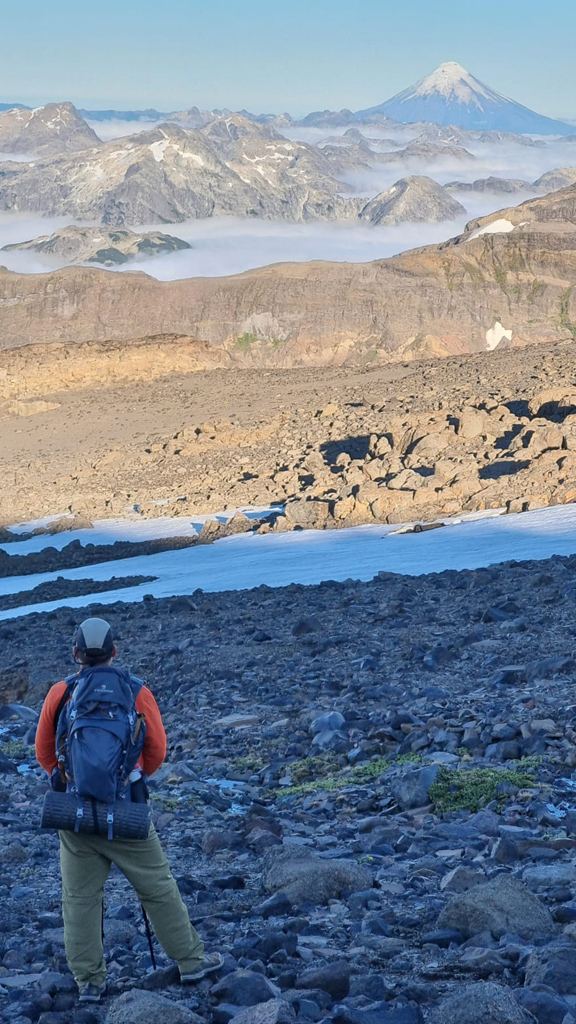
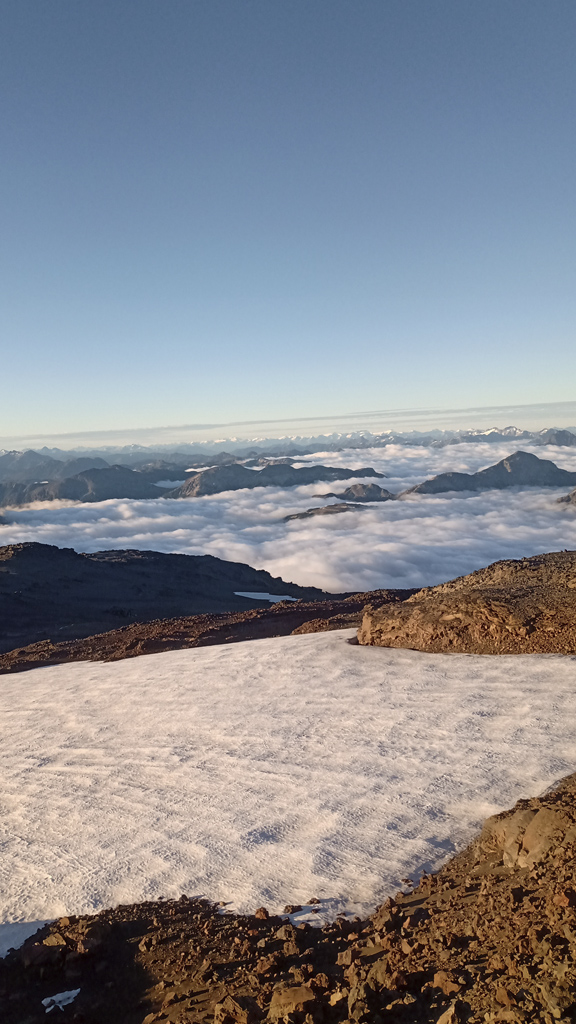
From the refuge, majestic views are visible: the south face of Cerro Tronador, the Manso Glacier, and the Blanco Glacier.
Are you going to conquer Refugio Viejo and become part of the Cerro Tronador story?